
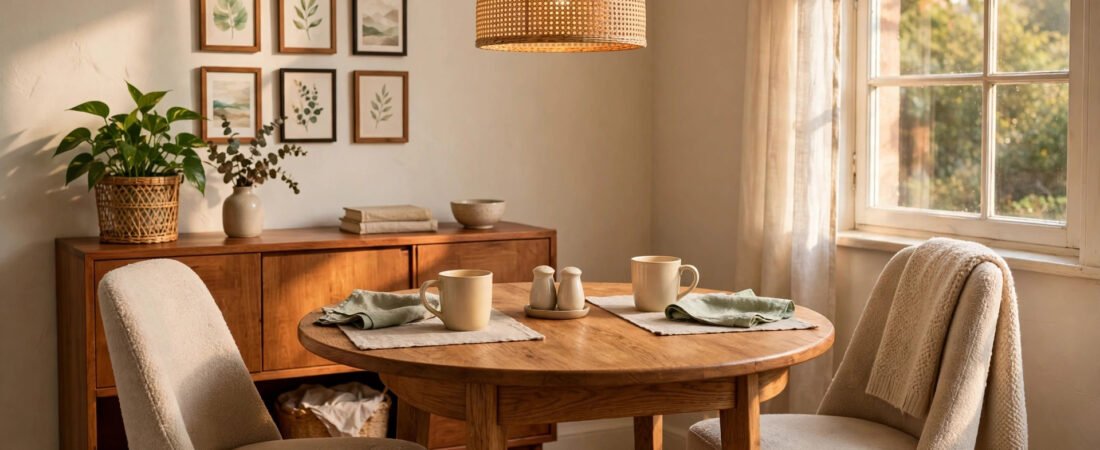
You do not need a grand dining hall — or a grand budget — to have a dining space you actually enjoy sitting in. These small dining room decor ideas on a budget prove that a cramped corner, a narrow kitchen diner, or a rented flat’s forgotten nook can become the cosiest spot in the house with nothing more than clever furniture choices, better lighting, and a few thoughtful styling touches.
The secret to decorating a tiny dining area is thinking in terms of function first, decoration second. Every square metre has to earn its keep, so the most successful small dining rooms lean on multi-purpose furniture, wall space instead of floor space, and light, warm finishes that make the room feel bigger than it is. Whether you are working with a studio corner, a galley kitchen-diner, or a box room that barely fits a table, every idea below is renter-friendly, easy to reverse, and kind to your wallet.
From round tables that seat more than you would think to pendant lighting tricks that define a dining “zone” for under £50, here are 15 practical, genuinely affordable ways to transform your small dining room.
1. Choose a Round Pedestal Table
If your dining area is tight on every side, a round pedestal table is the single smartest furniture upgrade you can make. Round tables have no sharp corners jutting into walkways, and because the pedestal base sits in the centre, nobody fights for knee room — a 90cm round table comfortably seats four, which often feels impossible in the same footprint as a square one.
Look for second-hand or flat-pack options with a slim profile; a light oak or white finish keeps the visual weight low. Budget to expect: £80–£200 new, often under £40 second-hand. Apartment Therapy’s roundup of small dining room design ideas highlights just how many real small homes rely on this one trick — it is a classic because it works.
2. Swap Chairs for a Bench
Four individual chairs need room to pull out and push back; a bench just slides under the table and disappears. Push a simple backless bench against the wall and you gain seating for two or three while keeping the circulation path clear — perfect for narrow kitchen-diners.
Bonus: many affordable dining benches have a lift-up seat or drawers underneath, giving you hidden storage for placemats, candles, and table linens. A plain wooden bench costs around £50–£120, and adding a cushion pad and a throw turns it into the cosiest seat in the house.
3. Pick a Drop-Leaf or Extending Table
A drop-leaf table is the ultimate small-space double agent: keep one or both leaves down for everyday breakfasts for two, then unfold it into a full dining table when friends come over. Wall-mounted fold-down tables go even further, disappearing entirely when you need the floor space for something else.
Expect £70–£180 for a basic drop-leaf table. If you rent and cannot drill into walls, freestanding drop-leaf designs are widely available and just as practical.
4. Turn an Awkward Corner into a Breakfast Nook
That dead corner between the kitchen and the living room? That is your dining room waiting to happen. Tuck a small round or square table into the corner, slide a bench along two walls, and suddenly an unused patch of floor becomes a sunlit nook everyone fights over.
To make it feel intentional rather than accidental, add a cushion or two to the bench, hang a small pendant above, and lay down a flatweave rug underneath. Corners are free — this transformation can cost as little as £60 if the table and bench come second-hand.
5. Zone the Space with a Rug — One of the Simplest Small Dining Room Decor Ideas on a Budget
In open-plan homes, a dining table can look like furniture that lost its way. A rug instantly fixes that: it visually “builds” a dining room where no walls exist, anchors the table, and adds warmth underfoot.
Choose a flatweave or low-pile rug so chairs slide easily — a thick pile snags every time someone sits down. Size it so the rug extends at least 60cm beyond the table edge on each side, so pulled-out chairs stay on it. Washable, budget-friendly rugs in this size run £60–£150, and our guide to the best rugs for small living rooms covers exactly which materials and patterns work hardest in compact spaces. Livingetc’s small dining room ideas guide makes the same point: an oversized-enough rug makes a tiny dining zone feel larger, not smaller.
6. Hang a Low Pendant Over the Table
Nothing defines a dining area like light. A single pendant hung low over the table — roughly 75–85cm above the tabletop — draws the eye, creates a focal point, and separates the dining zone from the rest of the room even in a studio flat.
Plug-in pendants with a fabric cord cost £25–£60 and need no electrician: just hook the cord over a ceiling hook and plug it into a nearby socket, perfect for renters. Fit it with warm-white bulbs (2700K) for that candlelit-restaurant glow; see our guide to warm-white LED bulbs for cosy lighting for the exact shades that flatter food and faces.
7. Add a Mirror to Double the Light
A large mirror opposite a window is the oldest small-space trick in the book, and it is especially powerful in dining rooms where people gather at dusk. It bounces daylight around during the day and candlelight in the evening, making the room feel twice its size for the cost of one frame.
Thrift stores and marketplace listings are full of big mirrors for £20–£50. Hang it where it reflects the window — or the table itself — rather than a blank wall, and keep the frame simple so the “window” illusion holds.
8. Style Open Shelves Instead of Buying a Sideboard
A bulky sideboard eats half a metre of floor depth in a small dining room. Open shelves give you the same storage and display space using nothing but wall — and they cost a fraction of the price.
Two or three wooden shelves above the table hold everyday glasses, a stack of bowls, and a few decorative pieces, keeping the tabletop clear for actual eating. Our guide to styling open shelves in the kitchen applies perfectly here: group items in odd numbers, mix heights, and leave breathing room so the shelves look curated rather than cluttered.
9. Build Budget Floating Shelves for Hidden Storage
If open shelving sounds right but shop-bought sets feel pricey, build your own. A pair of floating shelves from pine boards and concealed brackets costs under £30 in materials and takes an afternoon to fit — and in a rental, they fill neatly with filler when you leave.
Use them for the overflow that usually clutters small dining rooms: cookbooks, folded napkins, vases, and a trailing plant. Follow our step-by-step floating shelf tutorial for measurements, fixings, and weight limits so everything stays safely on the wall.
10. Create a Renter-Friendly Gallery Wall
Bare walls make a small dining room feel unfinished, but you do not need a drill to fix that. A small gallery wall of framed prints, postcards, and family photos above the table adds personality and colour for almost nothing — especially if you print your own photos and reuse frames from charity shops.
Use removable adhesive strips or picture-hanging strips rated for the frame weight, and your deposit stays safe. Our guide to hanging gallery walls without nails walks through layouts that look intentional, including the simple grid and the salon-style cluster — both work beautifully over a dining table.
11. Paint a Colour-Drench Accent or Arch
Here is the cheapest transformation on this list: one tin of paint. Colour-drenching the dining corner — walls, skirting, and even the ceiling in one warm tone — blurs the room’s boundaries and makes it feel larger and more cocooning at once. Alternatively, paint a simple arch behind the table in a muted sage, clay, or dusty blue to “frame” the dining zone.
A litre of paint costs £8–£15, and a half-wall or arch uses barely any. Warm whites, oatmeal, and soft greige keep things bright; one deep accent like forest green or terracotta adds drama that makes the corner feel like a destination rather than an afterthought.
12. Style the Tabletop Like a Stylist — Small Dining Room Decor Ideas on a Budget with Maximum Impact
You do not need a full table setting gathering dust to make a dining table look styled. One low centrepiece — a small vase of eucalyptus, a bowl of seasonal fruit, or a cluster of candles on a tray — keeps the table inviting without blocking conversation or stealing surface space.
The rule is simple: keep it low (below eye level when seated), keep it movable (a tray you can lift in one go), and keep it fresh by swapping stems with the seasons. Our tips on styling a coffee table transfer directly — the same layering principles of trays, heights, and textures make a dining tabletop look considered rather than cluttered.
13. Add Life with Plants and Herbs
Greenery is the fastest way to make a small dining room feel alive. A trailing pothos on a shelf, a small olive tree in the corner, or — most practically — a row of potted herbs on the windowsill all add colour and freshness for a few pounds each.
Herbs do double duty: they look pretty and you can snip them straight into dinner. Basil, mint, and thyme thrive on a bright sill and cost £2–£4 per pot from any supermarket.
14. Keep Folding Seating for Guests
Your everyday setup only needs to seat your household — but what about dinner parties? A pair of slim folding chairs stored in a cupboard or behind a door means you can host six without permanently sacrificing floor space to six chairs.
Look for folding chairs with a design you do not mind being seen: wooden or rattan styles cost £25–£50 each and can live on the wall as decoration between uses. Stackable stools work the same way and tuck under a console or into a corner.
15. Roll In a Bar Cart for Flexible Storage
A small bar cart is the Swiss army knife of tiny dining rooms: drinks station during parties, coffee station on weekday mornings, extra serving surface at Christmas. When you need the space, it simply wheels into a corner or the hallway.
Second-hand bar carts are a thrift-store staple at £30–£70. Style the top with a carafe, two glasses, and a small plant, and it reads as decor rather than clutter — useful storage that earns its footprint every single day.
Budget Cheat Sheet: What a Cosy Small Dining Room Really Costs
You do not need to do everything at once. Here is a realistic breakdown of what each layer of the transformation costs, so you can start with the biggest wins and add the rest over time:
- The essentials (table + seating): £100–£300 — a second-hand round table and a bench, or a new drop-leaf set.
- Zone it (rug): £60–£150 — one flatweave rug big enough for chairs to stay on.
- Light it (pendant + bulbs): £30–£80 — a plug-in pendant and warm-white bulbs.
- Dress the walls (mirror + gallery wall): £30–£80 — a thrifted mirror and adhesive-strip frames.
- Storage (floating shelves): £20–£40 — DIY boards and brackets.
- Finishing touches (paint, plants, styling): £20–£50 — one tin of paint, a few pots, and a tray centrepiece.
Total realistic makeover: £260–£700 — and if you buy second-hand and tackle the DIY ideas first, you can land well under £300. Start with lighting and the table, then layer in the rest as budget allows.
Frequently Asked Questions
What is the best table shape for a small dining room?
A round pedestal table is usually the best choice: no corners to bump into, better circulation around it, and a 90cm top comfortably seats four. For narrow galley layouts, a slim rectangular or drop-leaf table pushed against one wall works better than a round one.
How can I decorate a small dining room on a budget?
Focus on high-impact, low-cost changes: a rug to define the zone, a low-hung pendant for atmosphere, a mirror to bounce light, and one painted accent wall or arch. Together these four ideas can transform a dining corner for under £200.
How do I fit a dining table in a tiny kitchen?
Use the wall: push a small round table into a corner, try a drop-leaf or wall-mounted fold-down table, or extend your worktop with a breakfast-bar overhang and two stools. Keep seating slim and tuckable — a bench or folding chairs rather than bulky upholstered ones.
What colours make a small dining room look bigger?
Light, warm neutrals — warm white, oatmeal, pale greige — reflect the most light and are the safest choice. But colour-drenching in one deep tone (forest green, terracotta, navy) can also make a tiny dining room feel larger by blurring where the walls end; the key is committing to one colour rather than chopping the room into visual pieces.
Can I decorate a small dining room in a rental?
Absolutely — almost every idea here is renter-friendly. Use plug-in pendants instead of hardwired lights, adhesive strips for gallery walls and mirrors, freestanding shelves and bar carts instead of built-ins, and rugs and paint-free colour (through textiles and art) to add personality without touching the walls permanently.
Conclusion: Small Space, Big Appetite for Style
A small dining room is not a compromise — it is an invitation to be more intentional with every choice. Pick a table that fits the way you actually eat, light it like it matters, and let the walls do the storage work that floor space cannot. None of these ideas requires a renovation, a landlord’s permission, or more than a few hundred pounds.
Start this weekend with one change — hang that pendant, lay that rug, or paint that arch — and watch the smallest room in the house become everyone’s favourite seat. For more ways to stretch every square metre, see our 17 tricks for making a small apartment look bigger.